Step 3
Family Chronicle
The story of your family name in its village, as a book. For families who want the whole documented story of their name in the village, as one book, after a Roots Report.
Download this sample as delivered (PDF, 5.3 MB)
Family Chronicle
The Ando Families of Nagaiwaya: A Chronicle 長岩屋の安東一族 伝承帖
Bungo Province (today's Oita Prefecture) · Nishi-Kunisaki District
| Registered domicile | Nagaiwaya, Bungo-Takada City, Oita Prefecture |
|---|---|
| Prepared for | [client name withheld] |
Sample. The family name and registered domicile are fictional; every document, place and person in it is real.
綴Koseki Roots
At a glance
- This book follows the Ando families of the village, not your line alone.
- Whether they are your direct ancestors, we state chapter by chapter, with the strength of the evidence.
- Your koseki traces your line back to the 1870s–80s. The link to these older families usually rests on place and distribution, and our charts draw it as a dotted line.
How to read this book
Important: a Chronicle tells the documented story of the families who carried your surname in and around your ancestral village. Whether they are your direct ancestors is stated, chapter by chapter, with the strength of the evidence. Your koseki reaches back only to the 1870s–80s, so the link to these older families is usually drawn as a dotted line. In this sample, most of the book follows the Ando of Sano, about 9 km (6 mi) in a straight line from Nagaiwaya, your family's village. The two families may be connected, and the final chapter weighs the clues for the link.
Most of the people in this book were village headmen and local warriors — neither nobles nor peasants, but the literate families who ran rural Japan. The book shows what the records say, not a pedigree.
Dates. We write dates month first, as in the US, with the Japanese era year in parentheses: March 4, 1882 (Meiji 15). Dates before 1873 follow Japan's old lunar calendar and are given as in the source, with the approximate Western month in parentheses ("the 17th day of the 3rd month, 1580 (about April)"). Lunar months ran 3–7 weeks behind Western months, so the "1st month" began in late January or February. About every three years an extra "intercalary" (leap) month was inserted: an "intercalary 3rd month" is a second 3rd month that followed the ordinary one.
The Ando family of Nagaiwaya keep their registered domicile (honseki: the family's official address in the koseki) in Nagaiwaya, Bungo-Takada City, Oita Prefecture. Nagaiwaya lies midway up the Kunisaki Peninsula in northeastern Kyushu (Japan's southwestern main island), in the valley of the upper Tomiku River. It stands at the gate of Tennenji, a temple of the Rokugō Manzan (the network of mountain temples of Tendai, one of Japan's major Buddhist schools, unique to the peninsula). In the Edo period (1603–1868) it was Nagaiwaya Village of the Shimabara domain — one of some 260 domains ruled by hereditary lords (daimyo) under the shogun (Japan's military ruler). Shimabara's castle was in today's Nagasaki Prefecture; this corner of Kunisaki was one of its detached holdings.
About 9 km (6 mi) from Nagaiwaya lies Sano, in Kawachi Village. At Sano there was an Ando family that served as village headmen, generation after generation. The family is said to descend from Ōga Koremoto (大神惟基), by tradition the founder of the Ōga clan of Bungo. It is also said to have served the Ōtomo clan, the warlords who ruled Bungo (see "Who were the Ōtomo?" below). Its time as headmen began after the Battle of Kurakake (1580, in which the Ando fought on the Ōtomo side against the rebel Tawara Chikatsura, 田原親貫). Another Ando family of the same village preserved a series of documents from the Muromachi period (1336–1573) to the early Edo period.
This book follows the records of the Ando of Sano and Kawachi Village, the most likely origin of the Ando of Nagaiwaya. Whether the two connect is weighed in the final chapter. It begins with the legend of the Ōga clan and the origin of the Ando name. It continues with the age of warriors (1336–1600), as this book calls the Muromachi period together with the Warring States period (Sengoku, c. 1467–1600), when the Ando fought as retainers of the Ōtomo. It then turns to the headman's house of Sano village, and ends with a Meiji-era (1868–1912) district head and member of parliament.
A two-minute guide to Japanese history for family historians
Why you need this. The records in this book were written by people who took for granted a world of provinces, domains, headmen and lunar months. This page gives you just enough of that world to follow the story. Terms are also explained in our glossary.
The periods you will meet
Historians divide Japan's past by who held power. For a family historian, five periods matter:
| Period | Years | What it means for your family |
|---|---|---|
| Heian | 794–1185 | Court nobles rule from Kyoto, the imperial capital. The oldest surnames and estate names date from here. |
| Kamakura | 1185–1333 | The first warrior government. Land registers and estate records begin naming local families. |
| Muromachi (1336–1573) and Warring States (c. 1467–1600) | 1336–1600 | Central power collapses; regional warlords fight for territory; in Kyushu, the Ōtomo and the Shimazu of the south. Local land-holding families fight for them in return for land. Most documents in a Chronicle come from here. |
| Edo | 1603–1868 | Two and a half centuries of peace under the Tokugawa shoguns. The country is divided into some 260 domains, each run by a hereditary lord (daimyo). Villages are taxed in rice and run by hereditary headmen. Every household must register with a Buddhist temple. Travel abroad and emigration are forbidden. |
| Meiji | 1868–1912 | The shogun falls and the emperor's government modernizes Japan. The family register (koseki) begins (1872); everyone must take a surname (1875); villages are merged into modern municipalities (1889); and emigration to Hawaii, North America and later Brazil begins (1885 onward). This is your Issei's Japan (Issei: the first generation, who emigrated). |
In this book, "the age of warriors" means the Muromachi period (1336–1573) together with the Warring States period (c. 1467–1600): 1336–1600 in all.
Province, domain, district, village
Before 1871 Japan was divided into about 70 provinces (Bungo is now Oita Prefecture). Over them, in the Edo period, lay the domains — fiefs ruled by lords who taxed the villages inside them. Domains could own scattered pieces of land, which is how a village in Oita could belong to the lord of Shimabara in Nagasaki. In 1871 provinces and domains were replaced by prefectures; in 1889 thousands of hamlets were grouped into the villages whose names your Issei ancestors wrote on ship manifests. Those villages have since merged, twice more, into today's towns and cities. That is why the office that holds your family's register is usually in a city you have never heard of.
Who was who in a village
Most Japanese, then and now, descend from farmers, fishers and craftspeople. Each Edo-period village was run for its lord by a headman (shōya or nanushi). The post was hereditary and held by the leading farming family: literate, well-married, and often descended from the local warriors of the Warring States wars. Above the village stood the samurai, the lord's hereditary retainers and administrators, who — with a few privileged others — could officially use surnames and carry swords. Below the headman were ordinary registered households. In 1875 the Meiji government required everyone to register a surname. Most families chose names they had long used unofficially, often taken from a place, a field or a local notable house. A shared surname therefore shows where to look, not whom you descend from.
Names
Japanese names are written surname first, as in Japan: ANDO Kyūka (安東九華) is Mr. Ando. In older records a man might also carry an everyday name, a formal name and a scholar's courtesy name (a second, Chinese-style name). He might also hold an honorary court-style title granted by his lord (Kunai-no-jō 宮内丞, Izumi-no-kami 和泉守). The same man can appear under several of these; a Chronicle's index gathers them.
Dates
Japan counted years by imperial era (Meiji 15 = 1882). Until 1872 it also used a lunar calendar, whose months ran a few weeks behind ours and which gained an extra "intercalary" month every third year or so. Ages were "counted years": one at birth and another every New Year. We give Western years everywhere and note the original where it matters.
The records
From 1886 onward, the koseki records every birth, marriage, adoption and death in a household — but registers before that date are sealed by law. For the time before that we turn to the sources the Edo world produced. These include the temple's death register and memorial tablets, the village's religious census (a household count taken through the temples), the domain's land surveys and, for a few families, letters and land deeds handed down for centuries. Local histories compiled in the 1910s–30s (the "gazetteers" we cite) collected many of these. A Roots Report tells you which of them exist for your village; a Family Chronicle works through what they say. They record the families of the name in the village; whether they are your own ancestors can seldom be shown.
The emigration years
Government-sponsored emigration to Hawaii began in 1885, mostly from Hiroshima, Yamaguchi, Kumamoto, Fukuoka and later Okinawa. The mainland US and Canada followed in the 1890s, Brazil from 1908. Emigrants stayed on their village register. That is why the koseki of a family that left in 1905 still sits in a city office in Japan, and why its address (the honseki) is the key to everything.
Chart of the families in the records, maps, chronology
A note on names
Japanese names are written surname first, as in Japan: Ando Kyūka (安東九華) is Mr. Ando.
Many men in this book also carry an honorary court-style title (kanto-mei, 官途名). Their lord granted or approved it, and it was modeled on an office of the ancient imperial court. Examples are Kunai-no-jō (roughly "secretary of the Imperial Household"), Izumi-no-kami ("governor of Izumi Province"), Daizen-no-suke and Geki. These were not real offices; treat them as part of the name. "Ando Kunai-no-jō" simply means "the Ando who bore the Kunai title."
Nyūdō ("entered the Way") marks a warrior who had taken Buddhist vows while remaining active in the world, as in Nishihata Dōshū Nyūdō (西畠道秀入道).
Men of standing often had several names at once: an everyday name (Teigorō 貞五郎), a formal given name (Sōmei 宗明), a scholarly courtesy name and a pen name. Everyday names were often handed down in a house, which is why "Teigorō" recurs.
We write 安東 as "Ando" and the differently written 安藤 and 案藤 as "Andō" to keep them apart; they sound the same. The index lists every person with the titles they bore.
Who were the Ōtomo?
The Ōtomo were the warlords who ruled Bungo Province (today's Oita Prefecture) and, at their height, much of northern Kyushu, for some 400 years until 1593. Local land-holding families of Kunisaki, the Ando among them, fought for them in return for land. Their most famous head was Ōtomo Sōrin (大友宗麟; 1530–1587), the Christian warlord who ruled Bungo in the Warring States period. His sons Yoshimune (義統) and Chikaie (親家) wrote many of the letters in this book. "The three elders" were the three senior commanders who led the Ōtomo armies.
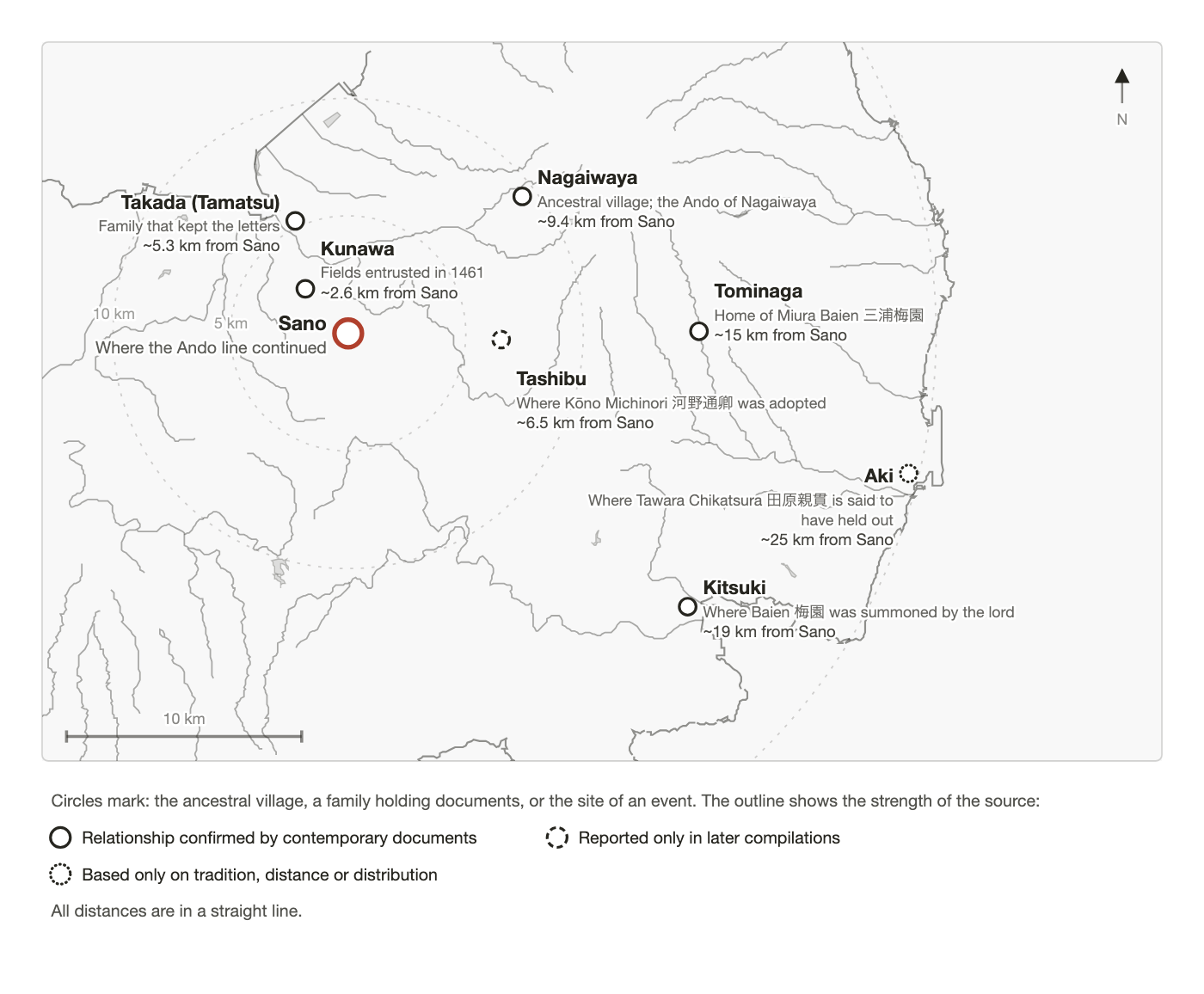
- Takada/Tamatsu, the family that kept the letters (5.3 km, 3.3 mi)
- Nagaiwaya (9.4 km, 5.8 mi)
- Tashibu, where Kōno Michinori (河野通卿) was adopted (6.5 km, 4 mi)
- Tominaga, home of Miura Baien (三浦梅園) (15 km, 9 mi)
- Aki, where Tawara Chikatsura (田原親貫) is said to have held out (25 km, 16 mi)
- Kitsuki, where Baien was summoned by the lord (19 km, 12 mi)
- Kunawa (the fields entrusted in 1461)
Chronology
| Year | Person | Event | Source |
|---|---|---|---|
| 1285 (est.) | Andō-myō 安藤名 (a named unit of taxable fields) | "Andō-myō, 6 chō 6 tan" in the Bungo land register | Ōtomo source collection |
| 1459, 10th month (about November) | Horiki Rokurōjirō 堀木六郎次郎 | Receives a written survey of the bounds of Okuhata | Oita Pref. sources |
| 1461, 7th month (about August) | Nishihata Dōshū Nyūdō 西畠道秀入道 | Entrusted with fields at Kunawa | Gazetteer, documents |
| 1532, 8th month (about September) | Maruyama Saburōemon 丸山三郎右衛門 | Receives notice of campaign from Yoshiaki | Gazetteer, documents |
| c. 1561–62 | Ando Kunai-shōyū Shigekage 安東宮内少輔鎮景 | Sends troops with the district league (a local alliance of warrior families) to Fukui, Hōshuyama and Ryōkawachi | Oita Pref. sources |
| 1580, 3rd month (about April) | Kunai-no-jō 宮内丞, Maruyama Geki-no-jō 丸山外記丞 | Attack the enemy at Kurakake, fire matchlocks | Gazetteer, documents |
| 1580, intercalary 3rd month (about May) | Kunai-no-jō 宮内丞, Daizen-no-suke 大膳亮 | Kunai-no-jō wounded defending at Kurakake | Gazetteer, documents |
| 1580, 5th month (about June) | Horiki Kunai-no-jō 堀木宮内丞 | Distinguished in the sortie at Sairai | Oita Pref. sources |
| 1580, 7th month (about August) | Kunai-no-jō 宮内丞, Koreyasu Tatewaki 是安帯刀, Maruyama Geki 丸山外記 | Receive 10 kin of saltpeter and 150 rounds of shot | Gazetteer, documents |
| 1580, 9th month (about October) | Kunai-no-jō 宮内丞 | Routs reinforcements from Buzen | Gazetteer, documents |
| 1580, 10th month (about November; est., note 2) | Kunai-no-suke 宮内亮 | Chikaie hears of his loyalty in holding Kurakake | Gazetteer, documents |
| 1580 | Kunai-shōyū Shigekage 宮内少輔鎮景, Munesada 統貞 | Granted Sano for their service at Kurakake | Gazetteer, biographies |
| after 1580 (est., note 1) | Kunai-no-jō 宮内丞 | Asked for laborers from his district, assessed at 100 kan (a measure of a fief's value) | Gazetteer, documents |
| 1587, 1st month (about February) | Maruyama Geki 丸山外記 | Receives the name "Munetoshi" from Yoshimune | Gazetteer, documents |
| 1599, 6th month (about July) | Horiki Yataemon 堀木弥太右衛門 | Lends 5 to of barley, takes 1 tan of field as security | Oita Pref. sources |
| 1606, 3rd month (about April) | Andō Yataemon 案藤弥太右衛門 | Receives fields from Kura-no-jō of Sano | Oita Pref. sources |
| 1786, 5th month (about June) | Miura Baien 三浦梅園, Ando Teigorō 安東貞五郎 | Baien writes to his son-in-law about his summons | Baien's collected works |
| 1825, 3rd month (about April) | Ando Kyūka 安東九華 | Born into the Sano family; later inherits the headmanship | Gazetteer, biographies |
| September 1882 | Ando Kyūka 安東九華 | Appointed head of Nishi-Kunisaki District | Gazetteer, officials |
| 1890 | Ando Kyūka 安東九華 | Elected to the first House of Representatives | Gazetteer, biographies |
| May 1899 | Ando Kyūka 安東九華 | The people of the district raise a longevity stele | Gazetteer, biographies |
| January 1904 | Ando Kyūka 安東九華 | Dies at home; the gazetteer gives his age as 79 (counted years) | Gazetteer, biographies |
Events concerning the origin of the Ando name and the Ando of Sano and Kawachi Village, in date order. Before 1873, months are those of Japan's old lunar calendar, given with the Western year. That calendar ran about three to seven weeks behind ours, so the month in parentheses ("about April") is approximate. From 1873 Japan used the Western calendar. "Est." marks a year estimated either by the source's editor or by us; our reasons are given in the notes. The story of the Ōga ancestor has no fixed date, so it is told in Chapter 1 rather than listed here. Silk-reeling in Kawachi Village and Michinori (通卿), who left the Sano family to head the Kōno family of Tashibu, are in Appendix 1.
How to read this book
The wording follows the strength of the evidence. Where the text states something plainly, or says it "is recorded," it rests on documents of the time. Where it says something "is said," "by tradition," or "according to tradition," it rests on tradition or on books compiled later.
The child of the serpent of Mount Uba
The story is set five generations before Ogata Koreyoshi (緒方惟栄), who was active in 1183.
- The Ando of Sano are said to descend from Ōga Koremoto (大神惟基) of Bungo
- By tradition, the founder of the Ōga was the child of a great serpent of Mount Uba who visited a young woman
- Ogata Saburō Koreyoshi (緒方三郎惟栄) is said to be his descendant in the fifth generation
- Koremoto's name appears in the Ōga genealogy
Ōga Koremoto, the ancestor of tradition
The Ando of Sano are said to descend from Ōga Koremoto (大神惟基) and to have served the Ōtomo clan generation after generation. Koremoto is held to be the founder of the Ōga clan, which spread across the Ōno and Naori districts of Bungo. The Sano family's tradition begins with him.
The serpent of Mount Uba
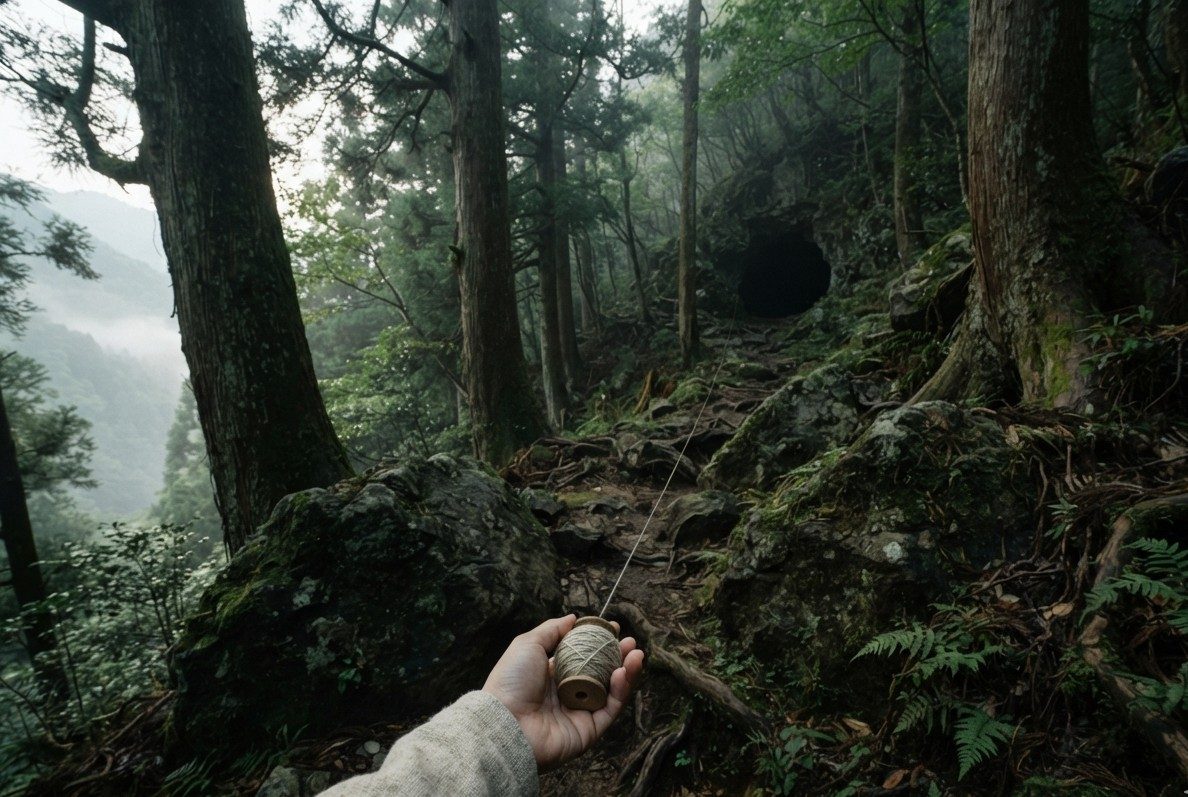
The story of the Ōga's beginning goes like this. To a young woman living in a mountain village of Bungo, a man who never gave his name came night after night. At her mother's urging, she pushed a needle threaded with yarn into the collar of his robe as he left. She followed the thread, and it led to a cave on Mount Uba, on the border with Hyūga Province (today's Miyazaki Prefecture).
Deep in the cave, it is said, lay a great serpent with the needle in its throat. In time the young woman bore a son. His descendant in the fifth generation, the story goes, was Ogata Saburō Koreyoshi (緒方三郎惟栄). The Genpei War (1180–85) was Japan's great civil war between the Minamoto and Taira clans at the end of the Heian period (794–1185). In that war he is said to have turned against the Taira in Bungo and driven them out of Dazaifu, the ancient seat of government for Kyushu.
Koremoto in the genealogy
The name of Koremoto (惟基) appears in the Ōga genealogy. The tradition naming him as the Ando ancestor places the Sano Ando within the Ōga line. The Ando name itself first appears in documents in the Eiroku era (1558–1570), the subject of Chapter 4. For the long years before that, it is the Sano family's tradition that carries the line.
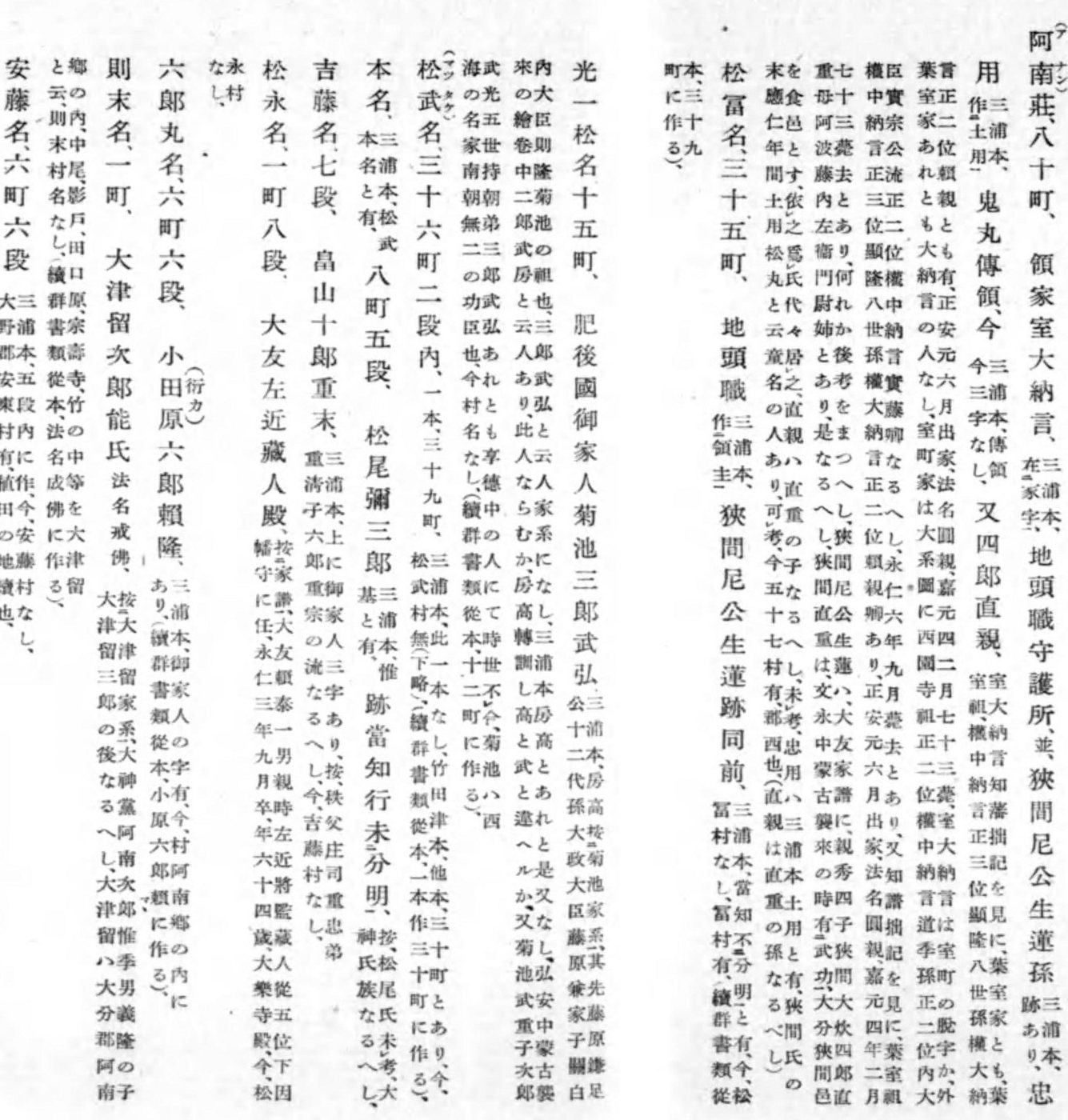
"Andō-myō" in the land register
- The Kamakura-era Bungo land register records "Andō-myō, 6 chō 6 tan"
- 6 chō 6 tan is about 6.5 hectares (16 acres) today
- One view identifies "Andō-myō" with Andō Village in Ōno District
- Ōno Town in Bungo-Ōno City today has a hamlet called Andō, home to Ando families
- The early-Edo Ando family was sometimes written "Andō" (安藤 or 案藤)
"Andō-myō" in the register
A land register (zudenchō) lists the extent and holders of paddy land province by province. Bungo's is believed to date from 1285. In it is the line "Andō-myō, 6 chō 6 tan" — about 6.5 hectares (16 acres) in today's measure. A myō was a named unit of taxable fields, often carrying a family's name; 1 chō is about 1 hectare (2.5 acres), and a tan is a tenth of a chō.
One view identifies this "Andō-myō" with Andō Village in Ōno District.
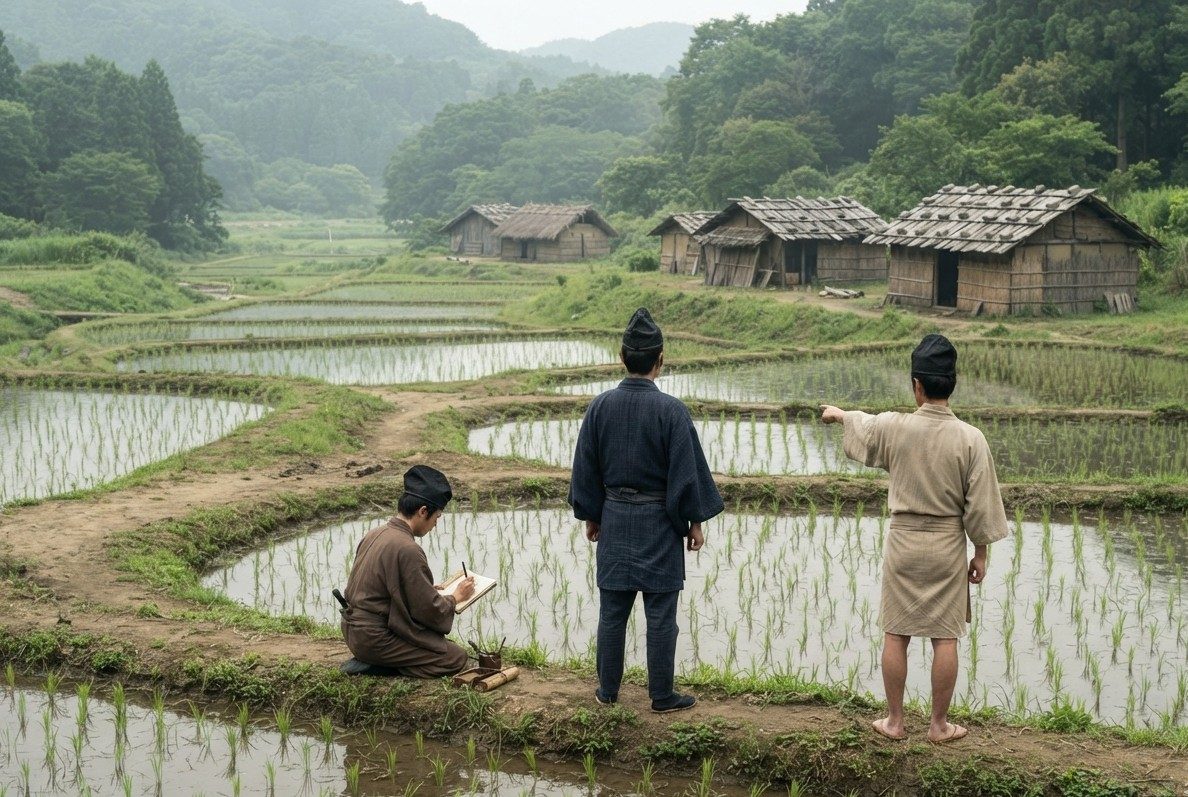
The hamlet of Andō in Ōno Town
Ōno Town in today's Bungo-Ōno City has a hamlet called Andō (安藤), where about 30 people named Ando (安東) live. The register's "Andō" and today's surname "Ando" are written with different characters. They are thought to be the same place-name written differently in different periods. Ōno District is also where the Ōga clan spread its power, which overlaps with the tradition in Chapter 1.
The hamlet of Andō is about 48 km (30 mi) from Sano. How Andō-myō relates to the Ando of Sano is a question for further research. The early-Edo Ando of Kawachi Village were also addressed in documents as "Andō," written 安藤 or 案藤 (Chapter 7). The names Ando (安東) and Andō (安藤) are thought to be two written forms of the same family name.
Old documents of the Horiki and Maruyama
- In 1459 Horiki Rokurōjirō (堀木六郎次郎) received a written survey of the bounds of Okuhata
- The document addressed to Horiki passed down in the Ando family of Kawachi Village
- In 1461 Nishihata Dōshū Nyūdō (西畠道秀入道) was entrusted with fields at Kunawa
- In 1532 Ōtomo Yoshiaki (大友義鑑) notified Maruyama Saburōemon (丸山三郎右衛門) of a campaign
- The documents addressed to Nishihata and Maruyama passed down in the Ando family of Sano
A survey of the bounds of Okuhata
On the 12th day of the 10th month (about November) of 1459, two men, Shizuki Munekiyo (志月宗清) and Takuma Sōdō (詫摩宗道), issued a written survey (chūmon) of boundaries to Horiki Rokurōjirō (堀木六郎次郎). It sets out the bounds of the holding at Okuhata in the order east, west, south and north. To the east it runs as far as the main road at Yamaga, and to the north as far as Nagasako. Landmarks include the torii (shrine gate) of Myōken and Mount Hananotake.
This survey is the oldest of the documents preserved by the Ando of Kawachi Village. The Horiki name also appears in a letter of 1580 and a bond of 1599 (Chapters 5 and 7). The Horiki Yataemon (堀木弥太右衛門) of the Keichō era (1596–1615) was written "Andō" in a later document. The Ando are thought to have once also used the name Horiki.
The deposit of 1461
On the 17th day of the 7th month of 1461, a deposit document was written with no sender's name, only a cipher signature (kaō). The addressee, written on the back, is "Nishihata Dōshū Nyūdō" (西畠道秀入道). It entrusts him with 1 chō 2 tan and more of paddy and 5 tan and more of dry field at Kunawa, and asks him to keep to the established terms.
Kunawa is thought to be today's Kunawa, 2.6 km (1.6 mi) northwest of Sano, because the names sound alike and the place is close to Sano. This deposit later passed down in the Ando family of Sano. [original ①]
Notice of Yoshiaki's campaign
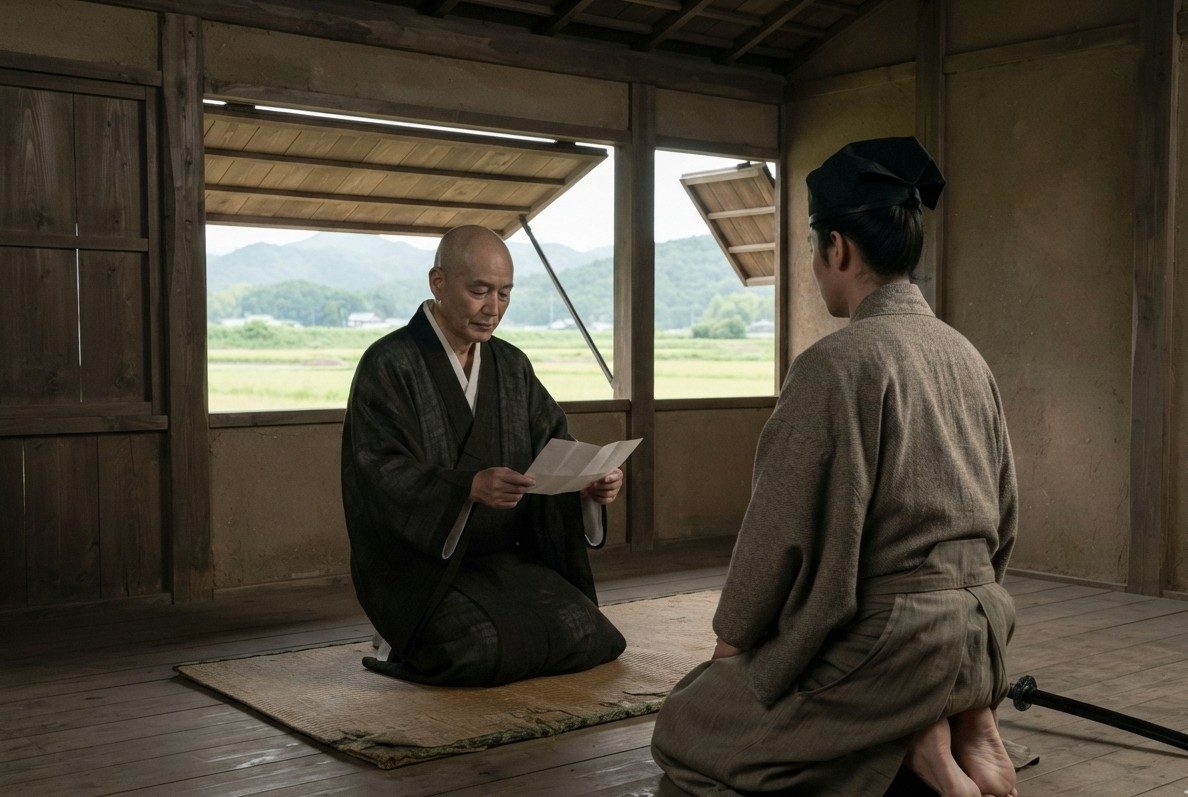
On the 21st day of the 8th month of 1532, Ōtomo Yoshiaki (大友義鑑) sent a letter to Maruyama Saburōemon (丸山三郎右衛門), giving notice that troops would soon go to Buzen and Chikuzen (provinces to the north in Kyushu). If he worked closely with the messenger and was diligent in loyalty, it says, he would certainly be rewarded later.
Yoshiaki was the 20th head of the Ōtomo. Maruyama Saburōemon received the notice as one of those to join the campaign. This notice, too, passed down in the Ando family of Sano. [original ②]
Documents addressed to the Maruyama
These two documents were held by the Ando family of Sano around 1923. A letter granting a name-character in 1587, held by the same family (Chapter 6), is also addressed to Maruyama Geki (丸山外記). The Maruyama were a family that fought beside Ando Kunai-no-jō (安東宮内丞) at Kurakake in 1580 (Chapter 5).
The Maruyama documents are thought to have come to the Ando of Sano through marriage or adoption, since the families named in them fought in the same battles. The Nishihata deposit, too, is thought to have been held first by the Maruyama, since Kunawa lies right next to Sano.
① The deposit of 1461
寛正二年七月十七日 花押
[裏書]西畠道秀入道殿
② Notice of Yoshiaki's campaign
竈門右馬助に可申候依如件
享祿五年八月廿一日
丸山三郎右衛門とのへ
The letter of Kunai-shōyū Shigekage
- Ando Shigekage (安東鎮景) sent a reply to the three elders of the Ōtomo
- The three elders had been encamped in Chikuzen since the previous year
- Shigekage served with the district league under Usuki Akihaya (臼杵鑑速)
- He sent troops to Fukui, Hōshuyama and Ryōkawachi, took a castle and held it
- A slip pasted on the letter reads "Ando Kunai-shōyū"
- The Kunai-shōyū Shigekage said to have been granted Sano is thought to be this man
A reply to the three elders
On the 17th day of the 3rd month (about April) of a year the letter does not give, Ando Shigekage (安東鎮景) sent a reply to the three elders of the Ōtomo. These were the three senior commanders who led its armies: Bekki Hōki-no-kami (戸次伯耆守), Usuki Etchū-no-kami (臼杵越中守) and Yoshihiro Sakon-tayū (吉弘左近大夫). Their letter of the 1st day of the 3rd month reached Shigekage on the 16th. He received it with reverence and wrote back the next day.
The three elders had been in camp in Chikuzen since the previous year. During that time the gunshū — the league of local warriors of the district — had served under the command of Usuki Akihaya (臼杵鑑速). Shigekage consulted with Sekisō (石叟), Mori Echizen-no-kami (森越前守), Kogo Inaba-no-kami (古後因幡守) and Tsutsumi Jirōbyōe-no-jō (堤次郎兵衛尉) and sent troops to Fukui, Hōshuyama and Ryōkawachi. There he took a castle, and the letter records that he was still holding it.
In closing, Shigekage answered that he was ready to gather the old and young of the league and serve. He asked the three elders to convey this to their lord. Ando Shigekage is thought to have been in a position to lead the league. [original ①]
The slip: "Ando Kunai-shōyū"
A slip of paper pasted later at the edge of the letter reads "Ando Kunai-shōyū." The honorary title of Shigekage (鎮景) — a name modeled on a court office — was Kunai-shōyū. After the Battle of Kurakake in 1580, Kunai-shōyū Shigekage is said to have been granted Sano (Chapter 5). The Shigekage who wrote this letter is thought to be that man.
The Kunai-no-jō (宮内丞) of the letters in Chapter 5 also bears a "Kunai" title, like Shigekage. Shigekage may still have led the family in 1580, or Kunai-no-jō may have succeeded him by then.
① Reply to the three elders
三月十七日 鎭景(花押)
[貼紙]「安東宮内少輔」
進上 戸次伯耆守殿 臼杵越中守殿 吉弘左近大夫殿
A year at Kurakake
- At the end of 1579 Tawara Chikatsura (田原親貫) rebelled against the Ōtomo and held Kurakake Castle
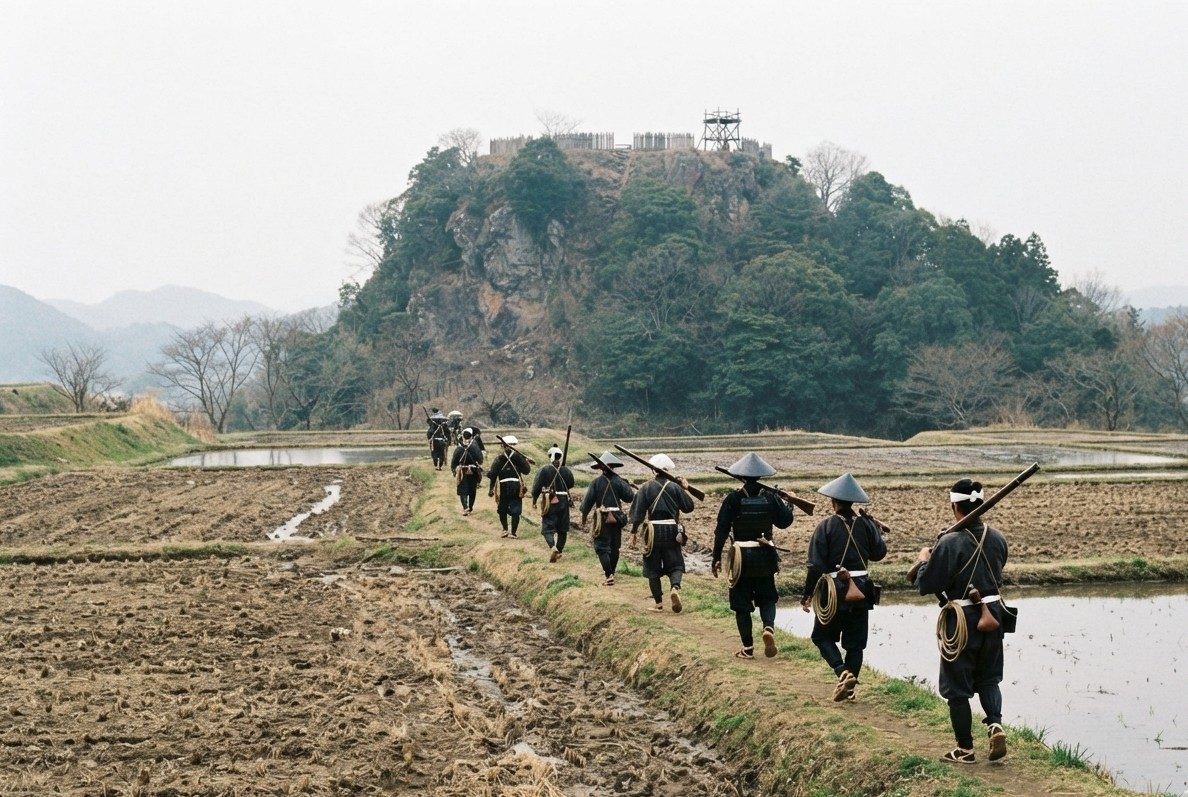
- In the 3rd month (about April), Ando Kunai-no-jō (安東宮内丞) fought beside Maruyama Geki (丸山外記), firing matchlocks
- In the intercalary 3rd month, Kunai-no-jō was wounded defending at Kurakake
- In the 5th month, Horiki Kunai-no-jō (堀木宮内丞) distinguished himself in the sortie at Sairai
- In the 7th month, Chikaie (親家) sent saltpeter and shot to Kunai-no-jō and the district league
- In the 9th month, Kunai-no-jō routed reinforcements from Buzen
- For service in the battle, Shigekage (鎮景) is said to have been granted Sano
Chikatsura holds Kurakake Castle
From the end of 1579, Tawara Chikatsura (田原親貫) of Kunisaki rebelled against the Ōtomo and held Kurakake Castle, also called "Sano Kurakake Castle." Sano was the land where the Ando's descendants would later live for generations.
Facing the enemy at Kurakake on the Ōtomo side was Ando Kunai-no-jō (安東宮内丞). Letters praising his service passed down in the Ando family of Kawachi Village. Their sender, Ōtomo Chikaie (大友親家), was the second son of Ōtomo Sōrin (大友宗麟), the Christian convert who led the Ōtomo at the height of their power. Chikaie is said to have been brought in to head the Tawara house after Chikatsura's fall. Chikaie's letters report, month by month, what happened before Kurakake Castle.
Nine months through the letters
In date order, the letters are addressed to Ando Kunai-no-jō (安東宮内丞; once as Kunai-no-suke, 宮内亮), Maruyama Geki-no-jō (丸山外記丞), Ando Daizen-no-suke (安東大膳亮), Horiki Kunai-no-jō (堀木宮内丞), Koreyasu Tatewaki (是安帯刀) and the district league:
| Date | To | Content |
|---|---|---|
| 3rd month, 17th (about April) | Kunai-no-jō 宮内丞, Maruyama Geki-no-jō 丸山外記丞 | Praises their attack on the 8th and their matchlock fire |
| 3rd month, 23rd (about April) | Kunai-no-jō 宮内丞 | Calls his news of a plot to work on those inside the castle reassuring |
| Intercalary 3rd month, 14th (about May) | Kunai-no-jō 宮内丞 | Hearing he was wounded defending on the 13th, says his loyalty will not be forgotten |
| Intercalary 3rd month, 14th (about May) | Daizen-no-suke 大膳亮 (from Jōnin 紹忍) | Celebrates the victory in the archery engagement; reports wounds of Kunai-no-jō and of a deputy |
| 5th month, 14th (about June) | Horiki Kunai-no-jō 堀木宮内丞 | Praises his distinction in the sortie at Sairai on the 12th |
| Early 7th month (about August) | Kunai-no-jō 宮内丞, Koreyasu Tatewaki 是安帯刀, Maruyama Geki 丸山外記, and the district league | Sends 10 kin of saltpeter and 150 rounds of shot |
| 9th month, 7th (about October) | Kunai-no-jō 宮内丞 | Praises his loyalty in routing reinforcements from Buzen on the 6th |
| 10th month, 21st (about November) | Kunai-no-suke 宮内亮 | Says he has heard of his loyalty in holding Kurakake since spring |
Apart from one letter from Jōnin (紹忍), all were sent by Chikaie (親家). The "Kunai-no-suke" of the 10th-month letter is thought to be the same man as Kunai-no-jō (Appendix 2).
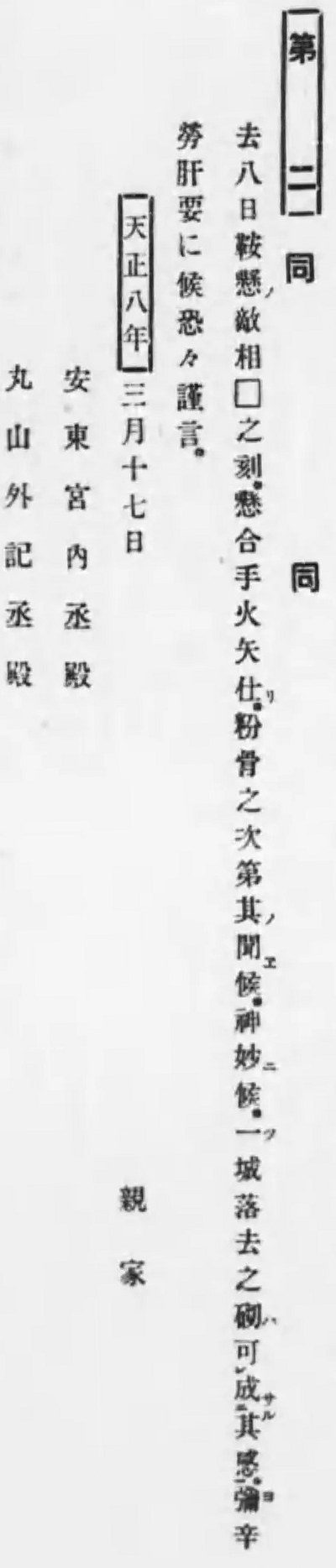
3rd month: matchlock fire
On the 8th day of the 3rd month, Ando Kunai-no-jō (安東宮内丞) fought the enemy at Kurakake together with Maruyama Geki-no-jō (丸山外記丞). The two attacked and fired tebiya — matchlocks. Nine days later, on the 17th, Chikaie (親家) sent them a letter calling their all-out effort admirable.
When the castle fell, Chikaie went on, they would be rewarded; he hoped they would strive even harder. On the 23rd, word came from Kunai-no-jō that he was advancing a plot inside the castle, and Chikaie wrote that this was reassuring. Kunai-no-jō not only fought outside the walls; he also worked on those within. [original ①]
Intercalary 3rd month: wounded
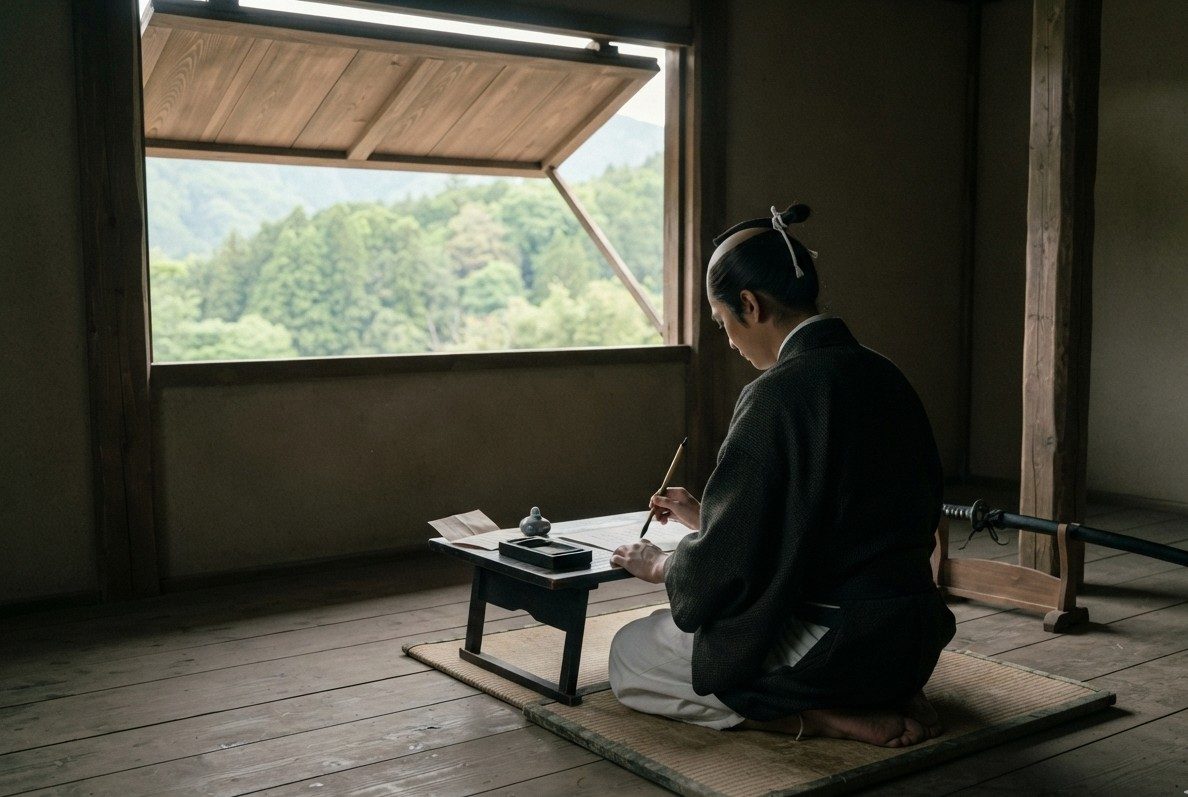
On the 13th day of the intercalary 3rd month there was a defensive fight before Kurakake Castle, and Ando Kunai-no-jō (安東宮内丞) was wounded. The next day, the 14th, Chikaie (親家) wrote to him that he was moved to see the report of his wound. "Your loyalty since the start of this fight will not be forgotten; I will keep it in my heart from now on." [original ②]
On the same 14th, Tawara Jōnin (田原紹忍), a senior retainer of the Ōtomo, sent a letter to Ando Daizen-no-suke (安東大膳亮). It reported Kunai-no-jō's wound and his matchless service, and praised also the wound of the deputy (myōdai) whom Daizen-no-suke had sent in his place. Daizen-no-suke is thought to have been a relative of Kunai-no-jō, or a man senior to him within the house.
5th and 7th months: Horiki Kunai-no-jō and the league
On the 12th day of the 5th month the fort at Sairai was overrun. To Horiki Kunai-no-jō (堀木宮内丞), who distinguished himself by taking enemy heads and weapons, Chikaie (親家) sent a letter of commendation (kanjō) dated the 14th. It is addressed to Horiki, yet it too passed down in the Ando family. Horiki Kunai-no-jō may be the same man as Ando Kunai-no-jō (安東宮内丞).
Kurakake Castle had not fallen by the end of spring. Early in the 7th month, Chikaie sent 10 kin of saltpeter (for gunpowder) and 150 rounds of shot. They went to Ando Kunai-no-jō, Koreyasu Tatewaki (是安帯刀) and Maruyama Geki (丸山外記), and to "the league of the district besides." Ten kin is about 6 kg (13 lb). The local warriors had formed a league (ikki, a sworn association) and were fighting before the castle with Kunai-no-jō.
9th month: reinforcements from Buzen
On the 6th day of the 9th month, men came from the direction of Buzen to reinforce Kurakake Castle. Ando Kunai-no-jō (安東宮内丞) at once attacked and routed them. The next day, the 7th, Chikaie (親家) praised his service as matchless and wrote that he would be rewarded when the fighting ended.
One tradition says Chikatsura (親貫) died in the castle in the 2nd month. But since reinforcements were still coming to the castle from Buzen in the 9th month, Chikatsura is thought to have still been there at this time (Appendix 2). [original ③]
The grant of Sano
The later biography tells what followed the battle. Kunai-shōyū Shigekage (宮内少輔鎮景), fourteenth in descent from Koremoto (惟基), attacked Kurakake Castle with his younger brother Munesada (統貞) and distinguished himself against Chikatsura (親貫). For that service he was granted Sano as his fief. His descendants then lived on at Sano, generation after generation, down to Kyūka (九華). [original ④]
What the letters confirm is that from the 3rd to the 10th month of 1580, men of the Ando family attacked Kurakake Castle on the Ōtomo side. Kunai-no-jō (宮内丞) fought on though wounded and stood before the castle with the league of local warriors. For that service, it is said, Sano became Ando land and the family lived there for generations. The beginning of the Ando of Sano lies where the letters and the family's tradition meet.
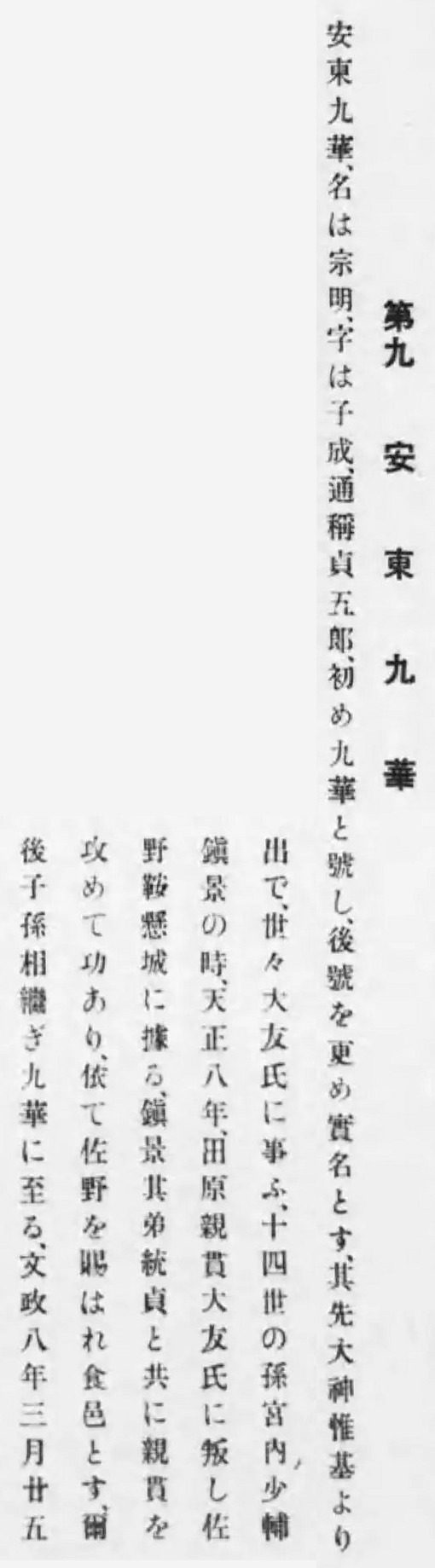
① 3rd month: matchlock fire
天正八年三月十七日 親家
安東宮内丞殿 丸山外記丞殿
② Intercalary 3rd month: wounded
天正八閏三月十四日 親家
安東宮内丞殿
③ 9th month: reinforcements from Buzen
天正八九月七日 親家
安東宮内丞殿
④ The grant of Sano
Yoshimune's letters and two court titles
- Yoshimune (義統) asked Ando Kunai (安東宮内) and Ando Geki (安東外記) to coordinate with the Horiki–Maruyama kin group
- Jōnin (紹忍) acknowledged the wish of Ando Jūnai-no-jō (安東十内允) and approved the title Daizen-no-suke
- Jōnin asked Kunai-no-jō (宮内丞) to send laborers from his district of 100 kan
- In 1587 Yoshimune gave Maruyama Geki (丸山外記) the name "Munetoshi"
- That name-grant passed down in the Ando family of Sano
Ando Kunai and Ando Geki
Ōtomo Yoshimune (大友義統), the son of Sōrin (宗麟), was then head of the Ōtomo. On the 4th day of the 5th month (about June), he wrote to two men, "Ando Kunai" (安東宮内) and "Ando Geki" (安東外記). The letter was written partly in kana, the informal Japanese script, rather than in formal Chinese-style prose. He was moved, he wrote, that in the recent fighting they had served with great energy under the direction of Hata Tōjibyōe-no-jō (波多藤次兵衛尉). And he went on: the first thing is to coordinate with the men of the Horiki–Maruyama kin group (ichirui) and never be off guard. [original ①]
This is the only letter in which the name Ando Geki appears. Because he is addressed beside Kunai, he is thought to be a member of the same Ando family. The Horiki–Maruyama kin group is thought to mean the houses of Horiki Kunai-no-jō (堀木宮内丞) and Maruyama Geki (丸山外記) in Chapter 5. The Ando, Horiki and Maruyama houses are thought to have served the Ōtomo together as one band.
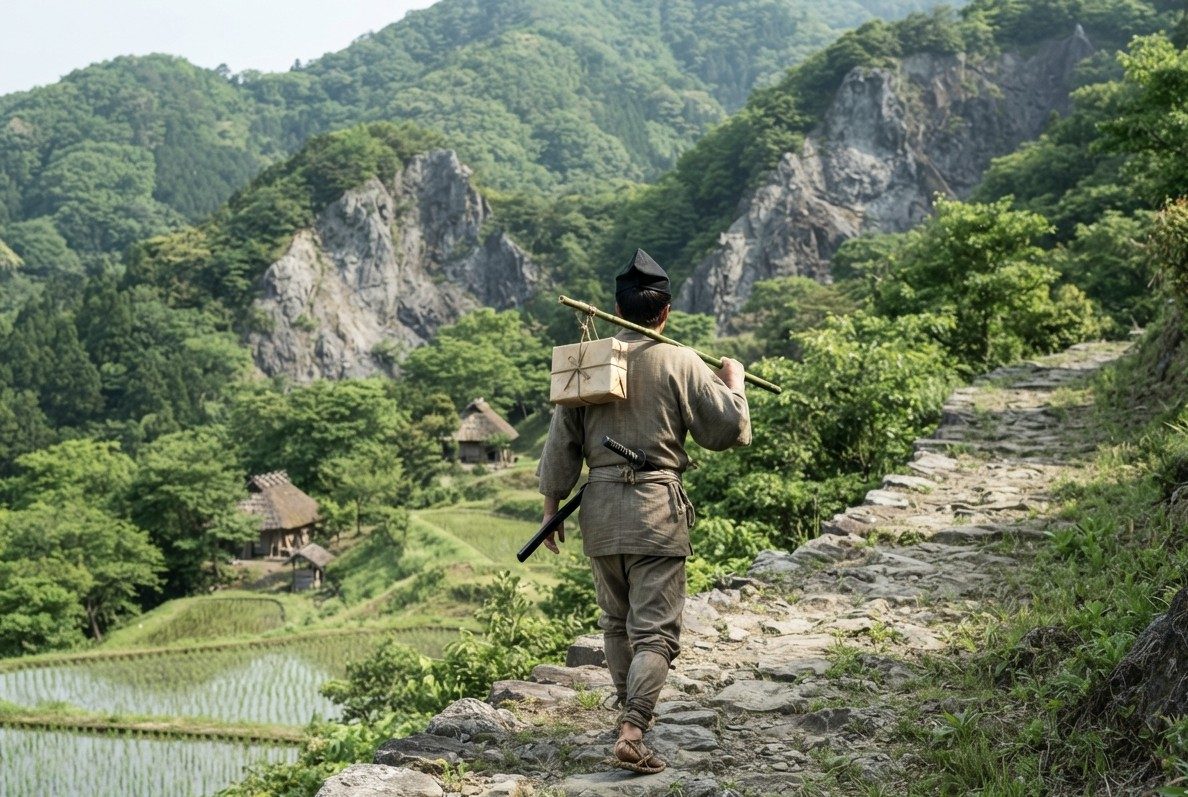
From Jūnai-no-jō to Daizen-no-suke
On the 24th day of the 2nd month, Tawara Jōnin (田原紹忍) issued a short note to Ando Jūnai-no-jō (安東十内允). It says only that he acknowledges the request for the title Daizen-no-suke. Such titles were names a lord permitted his retainers to use. The Ando Daizen-no-suke (安東大膳亮) to whom Jōnin wrote in Chapter 5 is thought to be this Jūnai-no-jō under his new name. [original ②]
Laborers from a district of 100 kan
On the 28th day of the 12th month, Jōnin (紹忍) wrote to Kunai-no-jō (宮内丞). He remembered well, he wrote, the promise exchanged with Daizen-no-suke (大膳亮) the year before, though time had passed. He then asked for laborers from the district's assessment of 100 kan (a kan was a unit of coin; in medieval records it measured a fief's assessed value). They were short of hands, he wrote, and he urged Kunai-no-jō to send them quickly.
The district Kunai-no-jō held is thought to have been assessed at 100 kan. Which district is not stated. The letter shows that the Ando held a district as local warriors of the Ōtomo and were obliged to supply laborers.
The name-grant "Munetoshi"
On the 7th day of the 1st month of 1587, Yoshimune (義統) gave Maruyama Geki (丸山外記) a name-grant (ichiji-jō). Its text is a single line: it bestows the name "Munetoshi." "Mune" (統) is a character from Yoshimune's own name. For a lord to give a retainer a character of his own name was a sign of high regard. [original ③]
This name-grant passed down in the Ando family of Sano. Its recipient was Maruyama Geki, addressed beside Ando Kunai-no-jō (安東宮内丞) in the letters of 1580; seven years later he received a name from Yoshimune. As Chapter 3 explained, the Maruyama documents are thought to have entered the Ando of Sano through marriage or adoption.
① Ando Kunai and Ando Geki
五月四日 よし統
安東宮内とのへ 安東外記とのへ
② From Jūnai-no-jō to Daizen-no-suke
二月廿四日 紹忍(花押)
安東十内允殿
③ The name-grant "Munetoshi"
天正十五年正月七日
丸山外記とのへ
Kamesuke and the headman of Sano
- Ando Izumi-no-kami (安東和泉守) administered the district and was asked to remit a temple's tax
- Ando Kamesuke (安東亀介) gave the stipend of the late Yaemon (弥右衛門) to Sasuke (左介)
- Kamesuke settled matters after the death of Kaemon (加右衛門), headman of Sano village
- In 1599 Horiki Yataemon (堀木弥太右衛門) lent 5 to of barley, taking 1 tan of field as security
- In 1606 Kura-no-jō (内蔵允) of Sano handed fields to Andō Yataemon (案藤弥太右衛門)
- The Yataemon of Horiki and of Andō are thought to be the same man
Izumi-no-kami administers the district
On the 1st day of the frost month (11th month; about December), Chinroku (鎮六) and Sensō (仙叟) sent a letter to Ando Izumi-no-kami (安東和泉守). They asked him to remit the tax on the lands of Senpukuji temple — 3 tan of paddy at Ogawara, out of the district's 50 kan. Since matters within the district were left to Izumi-no-kami's judgment, they wrote, they would defer to his wishes from now on.
The letter has no year. Even so, it shows that Ando Izumi-no-kami was in a position to administer the district.
Kamesuke and Sasuke
On the 21st day of the 8th month, Ando Kamesuke (安東亀介) wrote to Sasuke (左介). Grieving the sudden death of Yaemon (弥右衛門), he told Sasuke that this year Yaemon's stipend (fuchi, rice paid to a retainer) would go to Sasuke. In another letter Sasuke is called "Andō Sasuke" (安藤左介). Kamesuke is thought to have been the head of a house that paid stipends to its people.
The headman of Sano village
On the 13th day of the 3rd month, Kamesuke (亀介) wrote to Yataemon (弥太右衛門) about what would follow the death of Kaemon (加右衛門), headman (shōya) of "Sano village" (左野村). It sets out arrangements until Kaemon's son came of age, and asks that the villagers be made to accept them.
"左野村" is thought to be Sano village. In the early Edo period Ando Kamesuke was deciding how to handle the succession to the headmanship of Sano. Later the Ando would serve as headmen of Sano for generations (Chapter 9).
Yataemon of Horiki and of Andō
On the 13th day of the 6th month of 1599, Ueno Yoemon (上野与右衛門) borrowed 5 to (about 90 liters) of barley from Horiki Yataemon (堀木弥太右衛門). The bond says that if he could not repay it in autumn, he would hand over 1 tan of field at Baba.
On the 25th day of the 3rd month of 1606, Kura-no-jō (内蔵允) of Sano village (佐之村) gave a contract to "Andō Yataemon" (案藤弥太右衛門). Kura-no-jō and his son, in heavy arrears of tax, had gone into service elsewhere. Their fields had gone to waste, so they promised to hand them to Yataemon. "佐之村," too, is thought to be Sano.
In the addresses of these two documents Yataemon is written Horiki in one and Andō in the other. They are thought to be the same man, showing that the Ando used the names Horiki and Andō alike. From Horiki Rokurōjirō (堀木六郎次郎) of the Muromachi period to Yataemon of the early Edo period, the Ando family's documents passed down in one continuous run.
Teigorō, son-in-law of Miura Baien
- Rui (類), eldest daughter of the Kunisaki scholar Miura Baien (三浦梅園), married Ando Teigorō (安東貞五郎)
- Baien wrote his son-in-law a long letter about being summoned by the lord of Kitsuki
- Baien asked that the story of his reception be told to Rui as well
- The lord is said to have told his chief retainer Baien was "above the masters of Edo" (Edo: today's Tokyo)
- Kyūka (九華) was also known as Teigorō; the son-in-law Teigorō is thought to be of the Sano house
Baien's letter
In the 5th month (about June) of 1786, Matsudaira Chikakata (松平親賢), lord of the Kitsuki domain, summoned the scholar Miura Baien (三浦梅園) three times: on the 11th, 12th and 14th. Baien, who lived at Tominaga village in Kunisaki, was one of Edo Japan's most original philosophers. After returning home, Baien wrote on the 17th to his son-in-law, Ando Teigorō (安東貞五郎).
The letter records his reception at the castle item by item. Hearing that Baien disliked palanquins, the lord gave him a horse. When Baien called on the chief retainer Nakane (中根斎), he was greeted as an equal of a fief-holding retainer. On the 14th, he was given plum wine in the lord's presence and became remarkably drunk.
At the end, Baien asks Teigorō to tell all this to Rui (類) and make her happy. Rui was Baien's eldest daughter, married to Ando Teigorō. Baien wanted the daughter who had married away to share in the honor he had received. [original ①]
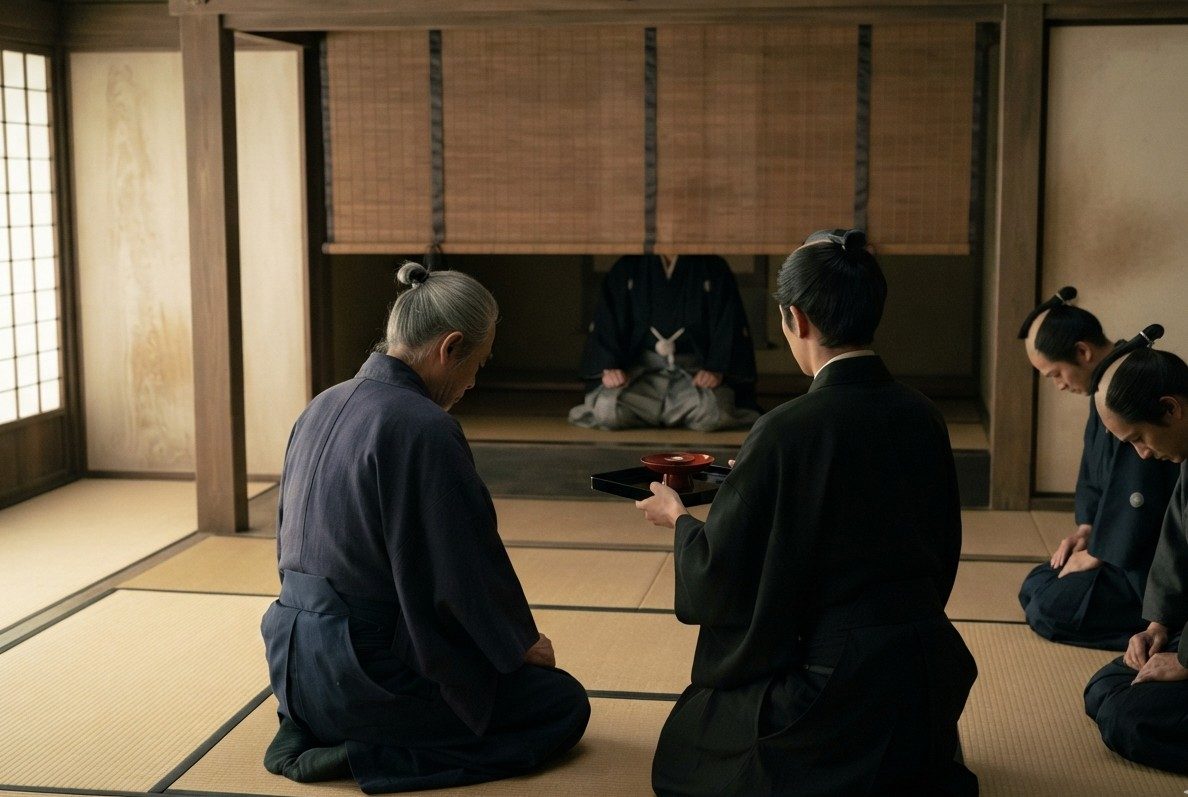
The lord's words
After the audience, the lord is said to have told his chief retainer: "I had thought the masters of Edo the finest in Japan, but having met Antei [Baien], he is higher still. I shall seat him as my teacher, as an honored guest." The lord and Baien (梅園) often talked of government. A memorial Baien later submitted is said to have been privately commissioned at this time.
The lord's words are not in the letter. They are recorded as tradition in a note the editor of Baien's collected works added to the letter. [original ②]
Teigorō's house
From the home of Baien (梅園) at Tominaga to Sano is about 15 km (9 mi) in a straight line. Kyūka (九華), too, was commonly called Teigorō (貞五郎); the name was handed down in the Ando of Sano. The Teigorō who received Baien's letter in 1786 is therefore thought to have been of the Ando family of Sano.
An epitaph composed by Baien records that the elder sister of Soyano Genpo (征矢野元甫), physician of the Nakatsu domain, married into "the Ando of Bungo." Which Ando family is not stated.
① Baien's letter
五月十七日 安貞
貞五郎樣
② The lord's words
Kyūka, district head and parliamentarian
- Kyūka (九華) was born into the Ando family of Sano in 1825
- He studied under Hoashi Banri (帆足万里), but is said to have come home on his father's death and inherited the headmanship
- He became a ward head in 1875 and later head of Nishi-Kunisaki District
- In 1890 he was elected to the first House of Representatives
- At 74 (Western years), the people of his district raised a longevity stele
Inheriting the headmanship
Like many men of standing, Ando Kyūka (安東九華) had several names: his formal given name was Sōmei (宗明), his scholarly courtesy name Shisei (子成), and his everyday name Teigorō (貞五郎), a name handed down in the house. He first used Kyūka as a pen name and later made it his legal name. He was born at the Sano house on the 25th day of the 3rd month (about April) of 1825.
As a child he learned to read Chinese texts from Nomoto Hakugan (野本白巌). At 15 he became a pupil of Hoashi Banri (帆足万里), a leading scholar of the day who also taught Western science, and pursued classical Chinese studies (the standard higher education of the time). Around the age of 20 he lost his father, and he is said to have given up his studies, returned home and taken up the headman's office. The headmanship of Sano, whose succession Kamesuke (亀介) had arranged in the early Edo period, was by Kyūka's time held by the Ando family.
From ward head to parliament
In 1875, under the short-lived ward system of the 1870s, Kyūka (九華) became head (kochō) of the 2nd small ward of the 1st great ward, then ward head (kuchō). He went on to serve in Mizuma (a short-lived prefecture of the 1870s), Fukuoka and Oita prefectures, and in September 1882 was appointed head of Nishi-Kunisaki District. The register of district heads lists "Ando Kyūka," with Kawachi Village in Nishi-Kunisaki as his original domicile.
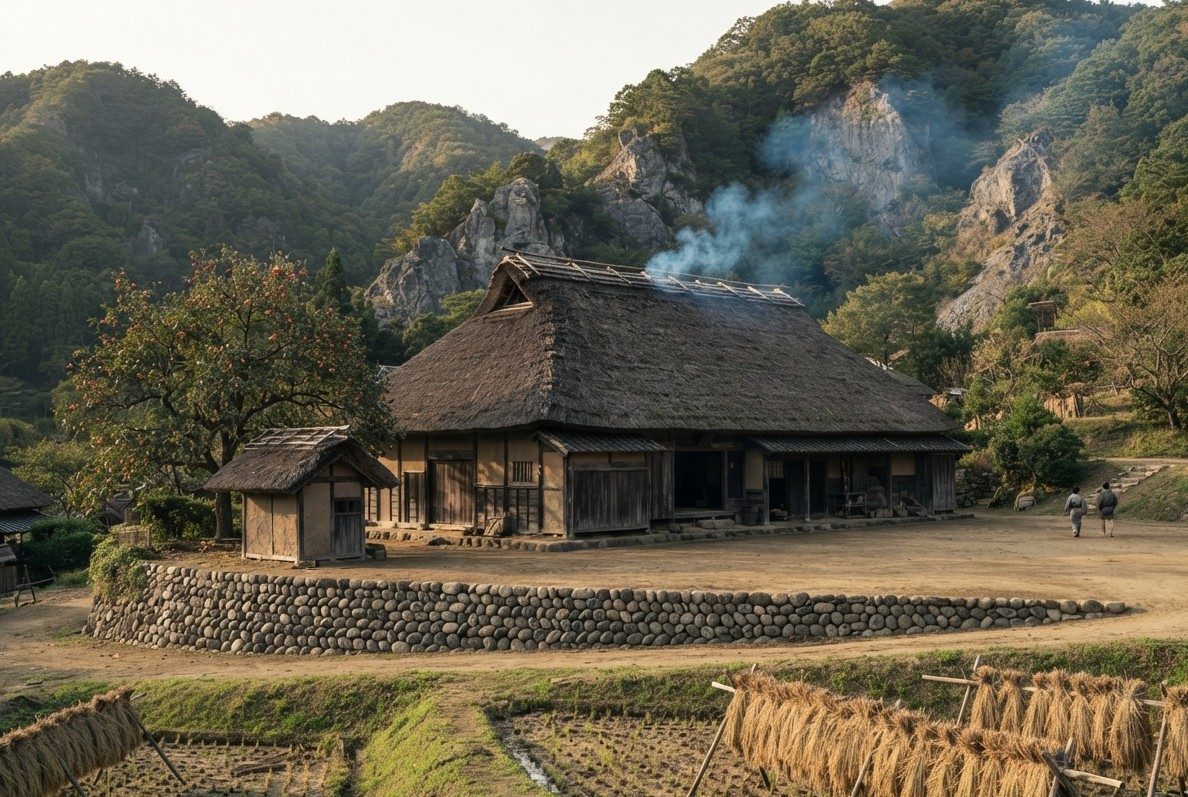
When the Imperial Diet, Japan's first national parliament, opened in 1890, Ando Kyūka was elected to the House of Representatives. After the first Diet was dissolved he was re-elected, and is said to have chaired the Committee of the Whole House. In his last years he lived quietly in his home district and is said to have kept out of the politics of the day.
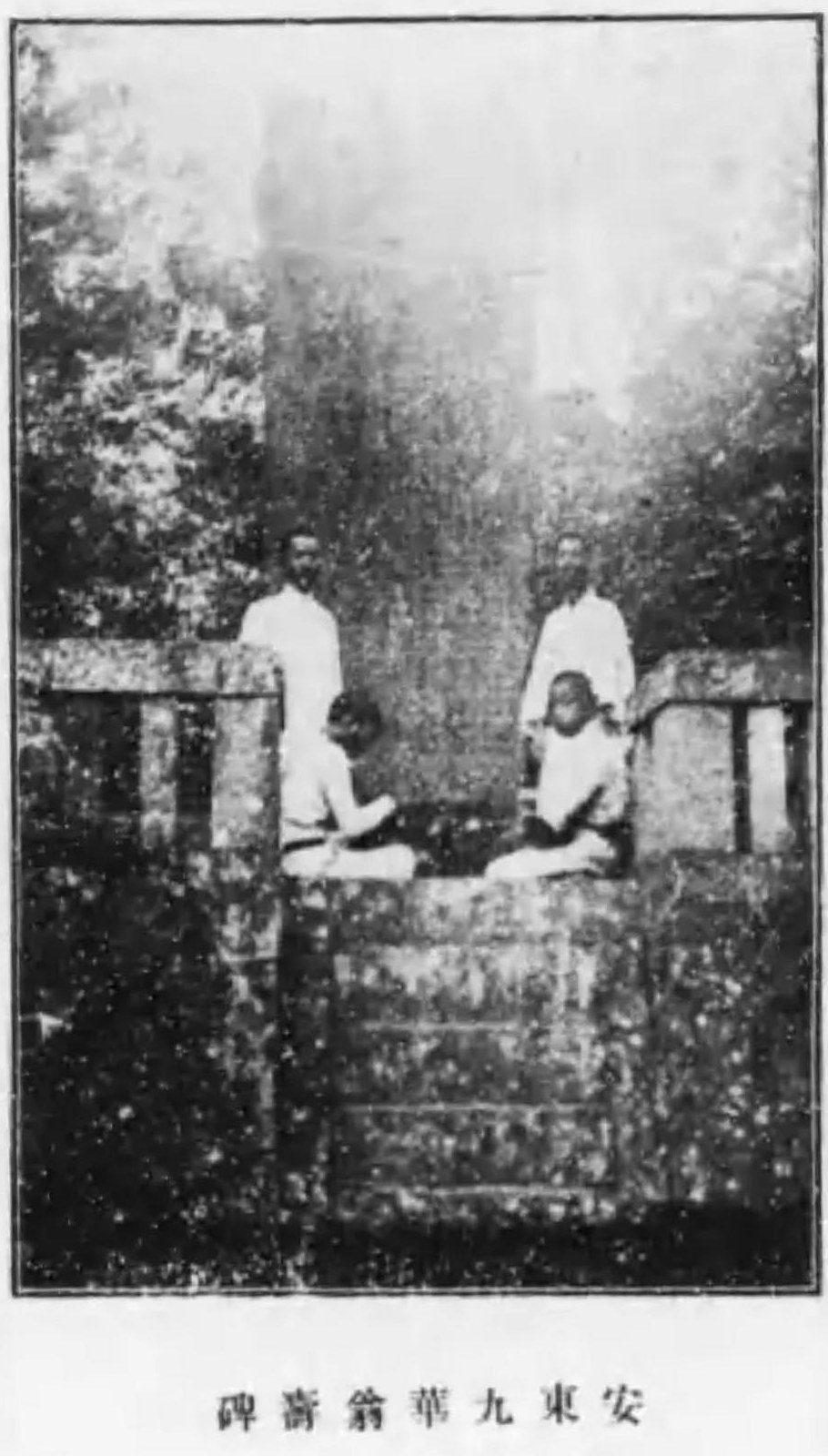
The longevity stele
A longevity stele (juzōhi) is a monument raised while its subject is still alive. In May 1899, when Kyūka (九華) was 74 (Western years), the people of his district agreed to raise one, to hand down his achievements to later generations. It is said to have stood east of his house.
Five years after the stele was raised, he died at home on January 8, 1904; the gazetteer gives his age as 79 (counted years). [original ①]
One line spanning three hundred years
According to the family tradition recorded in the gazetteer, the Ando who fought before Kurakake in 1580 were still the headman's house of Sano three hundred years later. That was the time of the Meiji Restoration of 1868, when the shogun fell and the emperor's government began modernizing Japan. The family produced a district head and a member of parliament. The generations between are summed up in a single line: "Thereafter his descendants succeeded one another down to Kyūka." Their names, one by one, may be recoverable from the family temple's death register and memorial tablets.
① The longevity stele
How to use this book
To trace the family further
From Nagaiwaya to Sano is about 9 km (6 mi). The Ando of Nagaiwaya may connect to this line. Three sources may add clues, though none is likely to settle it:
- Closed registers (joseki tōhon). They name the Meiji-era household head and the head before him. Only rarely does an entry record a move from Sano or Kawachi Village; if one does, it narrows the link.
- The family temple's death register and memorial tablets. Compare the names of Edo-period heads with names handed down in the Sano headman's house (such as Teigorō, 貞五郎).
- Photographs held by the Department of Japanese History, Kyushu University. They show the Ando documents of Kawachi Village and may confirm the Horiki/Ando spellings and the dates of Kamesuke (亀介) and Izumi-no-kami (和泉守).
Appendix 1 gathers the other Ando of Kawachi Village; Appendix 2, the points on which sources disagree.
The Ando of Kawachi Village
Kawachi Village had people named Ando besides the headman's house of Sano. Here are the Takada family that kept the letters, a man born into the Sano house, and the men who began silk-reeling in the village.
The Ando of Takada Town who kept the letters
Around 1923 the Kurakake letters were divided between an Ando family of Takada Town and a family of Tamatsu in Takada. In 1955 they were transcribed and published as a single group, as documents held by Mr. Ando Takashi (安東隆) of Takada Town (formerly Kawachi Village). The originals' whereabouts are unknown; the transcription was made from photographs at Kyushu University's Department of Japanese History. The family was originally of Kawachi Village, like Sano.
Kōno Michinori, born in the Sano house
Kōno Michinori (河野通卿) was born in 1832 into the Ando family of Sano in Kawachi Village, and was adopted by Kōno Michitatsu (河野通達) of Tashibu village to head the Kōno family. He served as senior headman and, after the Restoration, as ward head of Tashibu, using his own house as the village office. He is said to have opened the village's first school. Like Kyūka (九華) he studied under Hoashi Banri (帆足万里), and died in 1899 at 68 (counted years).
Silk-reeling in Kawachi Village
From 1861 to 1864 Ando Teisai (安東貞斎) of Kawachi Village experimented with treadle silk-reeling. Around 1874–75 Ando Sen (安東潜) of Kawachi Village began treadle reeling, and in 1880 he installed six machine stations. At the start of silk-reeling in the district, the Ando name of Kawachi Village appears twice.
Where the sources disagree
The same event is sometimes dated or named differently in different sources. For each topic we set out what each source says and, where we have one, our view.
The date of Chikatsura's death
- The Hōyōshi and Bungo Iji (older local histories of Bungo) say Chikatsura (親貫) held two castles, Aki and Kurakake. In their account the castle fell on the 24th day of the 2nd month (about March) of 1580, and he killed himself. These are quoted in a note by the editor of the Nishi-Kunisaki Gunshi.
- On the strength of the letter of Chikaie (親家) to Kunai-no-jō (宮内丞) of the 7th day of the 9th month, the gazetteer's editor judged that Chikatsura was still alive then. He therefore placed his death after the 24th of the 2nd month.
Our view. The text follows the gazetteer's editor. We read Chikaie's letters of the 3rd to 9th months as written while Chikatsura was in Kurakake Castle.
Date and addressees of the 7th-month letter
- The Nishi-Kunisaki Gunshi gives the date as "7th month, 2nd day" and the addressees as "Ando Kunai-no-jō, Koreyasu Tatewaki-no-suke, Maruyama Geki-no-suke."
- Oita Prefecture Historical Sources vol. 10 gives "7th month, 1st day" and "Ando Kunai-no-jō, Ari'yasu Tatewaki-no-jō, Maruyama Geki-no-jō, and the league of the district besides."
Our view. The gazetteer transcribed from the original; the prefectural series from Kyushu University's photographs. The 1st and the 2nd may each be the date, so the text says "early in the 7th month."
Kunai-no-jō, Kunai-no-suke, Kunai-no-jō (允)
- The addressee of the 10th-month letter is read "Ando Kunai-no-suke" by the gazetteer and "Andō Kunai-no-jō (允)" by the prefectural series.
- The other letters are addressed to "Kunai-no-jō" (丞).
- 允 and 丞 are both read jō (the last part of the title); sources write the title either way.
Our view. The reference to Kurakake "last spring," and the phrasing that Takuma Sado Nyūdō (詫摩佐渡入道) will convey the message, match the 7th-month letter. We therefore take Kunai-no-suke, Kunai-no-jō (允) and Kunai-no-jō (丞) to be one man.
The year of Shigekage's letter
- The editor of the prefectural series dates it around 1561 or 1562.
- Another view, based on the year the three elders were in camp in Chikuzen, dates it to 1569.
The year of Yoshimune's letter
- The gazetteer gives no year for the letter of Yoshimune (義統) of the 4th day of the 5th month.
- The editor of the prefectural series interprets "Horiki–Maruyama" as Horiki Kunai-no-jō (堀木宮内丞) and Maruyama Geki-no-jō (丸山外記丞), and relates the letter to the Kurakake fighting of 1580.
The character "Mune" from Yoshimune
- It is sometimes said that the Ando of Sano received the character "Mune" (統) from Ōtomo Yoshimune (大友義統). The evidence cited is the name-grant held by the Sano Ando, printed in the gazetteer's documents chapter.
- That grant is addressed "to Maruyama Geki"; the recipient of "Mune" was Maruyama Geki (丸山外記) (Chapter 6).
- The gazetteer's biographies name the younger brother of Shigekage (鎮景), "Munesada" (統貞). No document granting him a name is printed in the documents chapter.
Reasons for dating; reading the chart and maps
- Note 1 — After 1580. The letter of Jōnin (紹忍) of the 28th day of the 12th month (about January) gives no year. Kunai-no-jō (宮内丞) held a district of 100 kan and was obliged to supply laborers. Jōnin also refers to a promise made the year before with Daizen-no-suke (大膳亮). The letter is therefore thought to have been written after the Kurakake fighting.
- Note 2 — 10th month, 1580. The letter of Chikaie (親家) of the 21st day of the 10th month gives no year. The enemy's incursion "last spring" and the siege of Kurakake date from the spring of 1580, so we take the letter to be of that year.
- Reading the chart of families. Ando Kunai-no-jō (安東宮内丞), Ando Daizen-no-suke (安東大膳亮) and Ando Geki (安東外記), and Maruyama Geki (丸山外記), are simply listed together as addressees of the letters. Their relationships are not stated. The dashed line from Ōga Koremoto (大神惟基) to the Sano Ando follows the gazetteer's biographies. The dotted line from Kyūka to the Ando of Nagaiwaya rests on distance and distribution alone.
- Map points are placed at locations given by the Geospatial Information Authority of Japan. Kurakake Castle is shown at Sano, as it is also called "Sano Kurakake Castle."
- The story from the Tale of the Heike (Heike Monogatari), the medieval war epic, is given in outline only; the original is not quoted.
- Medieval document texts follow the transcriptions in the Nishi-Kunisaki Gunshi (1923) and Oita Prefecture Historical Sources vol. 10 (1955). □ marks characters not given in the transcription.
- Illustrations are AI-generated. The sources contain only what is related in the story, register or letter placed before each picture. Mountain paths, rooms, figures and dress were imagined for the picture.
- The year of the land register follows the arrangement of the Ōtomo source collection.
People in this book
| Name | Title | Who they were | Ch. |
|---|---|---|---|
| Ōga Koremoto 大神惟基 | — | Founder of the Ōga of Bungo; said to be the Sano Ando's ancestor | 1 |
| Ogata Saburō Koreyoshi 緒方三郎惟栄 | — | By tradition fifth in descent from the Ōga founder | 1 |
| Horiki Rokurōjirō 堀木六郎次郎 | — | Receives a survey of the bounds of Okuhata | 3 |
| Shizuki Munekiyo 志月宗清 · Takuma Sōdō 詫摩宗道 | — | Issue the survey of the bounds of Okuhata | 3 |
| Nishihata Dōshū Nyūdō 西畠道秀入道 | Nyūdō | Entrusted with fields at Kunawa | 3 |
| Maruyama Saburōemon 丸山三郎右衛門 | — | Receives notice of campaign from Yoshiaki | 3 |
| Ōtomo Yoshiaki 大友義鑑 | — | Head of the Ōtomo; sends troops to Buzen and Chikuzen | 3 |
| Kamado Uma-no-suke 竈門右馬助 | Uma-no-suke | Named in Yoshiaki's notice as the man to report to | 3 |
| Ando Shigekage 安東鎮景 (Kunai-shōyū 宮内少輔) | Kunai-shōyū | Replies to the three elders; said to have been granted Sano | 4, 5 |
| Bekki Hōki-no-kami 戸次伯耆守 | Hōki-no-kami | One of the three elders of the Ōtomo; receives Shigekage's reply | 4 |
| Usuki Etchū-no-kami 臼杵越中守 | Etchū-no-kami | One of the three elders of the Ōtomo; receives Shigekage's reply | 4 |
| Yoshihiro Sakon-tayū 吉弘左近大夫 | Sakon-tayū | One of the three elders of the Ōtomo; receives Shigekage's reply | 4 |
| Usuki Akihaya 臼杵鑑速 | — | Commands the district league | 4 |
| Sekisō 石叟 · Mori Echizen-no-kami 森越前守 · Kogo Inaba-no-kami 古後因幡守 · Tsutsumi Jirōbyōe-no-jō 堤次郎兵衛尉 | Echizen-no-kami; Inaba-no-kami; Jirōbyōe-no-jō | Consulted by Shigekage before the campaign | 4 |
| Ōtomo Sōrin 大友宗麟 | — | The Christian warlord who ruled Bungo; father of Yoshimune and Chikaie | 5, 6 |
| Tawara Chikatsura 田原親貫 | — | Holds Kurakake Castle against the Ōtomo | 5 |
| Ōtomo Chikaie 大友親家 | — | Sōrin's second son; issues the Kurakake commendations | 5 |
| Tawara Jōnin 田原紹忍 | — | Senior Ōtomo retainer; writes to Daizen-no-suke and Kunai-no-jō | 5, 6 |
| Ando Kunai-no-jō 安東宮内丞 (Kunai-no-suke 宮内亮) | Kunai-no-jō (Kunai-no-suke) | Wounded at Kurakake; asked for laborers from his 100-kan district | 5, 6 |
| Horiki Kunai-no-jō 堀木宮内丞 | Kunai-no-jō | Distinguished in the sortie at Sairai | 5 |
| Ando Daizen-no-suke 安東大膳亮 (Jūnai-no-jō 十内允) | Daizen-no-suke (earlier Jūnai-no-jō) | Sends a deputy to Kurakake; receives the title Daizen-no-suke | 5, 6 |
| Maruyama Geki 丸山外記 | Geki | Fights beside Kunai-no-jō; receives the name "Munetoshi" | 3, 5, 6, A2 |
| Koreyasu Tatewaki 是安帯刀 | Tatewaki | Receives saltpeter and shot | 5, A2 |
| Takuma Sado Nyūdō 詫摩佐渡入道 | Sado; Nyūdō | Conveys Chikaie's words | A2 |
| Ando Munesada 安東統貞 | — | Said to be Shigekage's younger brother | 5, A2 |
| Ōtomo Yoshimune 大友義統 | — | Head of the Ōtomo; writes to Ando Kunai and Geki; grants a name to Maruyama Geki | 6 |
| Hata Tōjibyōe-no-jō 波多藤次兵衛尉 | Tōjibyōe-no-jō | Directs Ando Kunai and Ando Geki in the fighting | 6 |
| Munehide 統秀 | — | Named in Yoshimune's letter as the bearer of further word | 6 |
| Ando Geki 安東外記 | Geki | Receives Yoshimune's letter with Kunai | 6 |
| Ando Izumi-no-kami 安東和泉守 | Izumi-no-kami | Administers the district | 7 |
| Chinroku 鎮六 · Sensō 仙叟 | — | Ask Ando Izumi-no-kami to remit a temple's tax | 7 |
| Ando Kamesuke 安東亀介 | — | Pays stipends; settles the Sano headmanship | 7, 9 |
| Yaemon 弥右衛門 | — | Dies suddenly; his stipend goes to Sasuke | 7 |
| Kaemon 加右衛門 | — | Headman of Sano village; Kamesuke settles matters after his death | 7 |
| Andō Sasuke 安藤左介 | — | Receives a stipend from Kamesuke | 7 |
| Andō Yataemon 案藤弥太右衛門 (also Horiki 堀木弥太右衛門) | — | Lends barley; receives fields at Sano | 3, 7 |
| Ueno Yoemon 上野与右衛門 | — | Borrows barley from Horiki Yataemon | 7 |
| Kura-no-jō 内蔵允 | Kura-no-jō | Of Sano village; hands his fields to Yataemon | 7 |
| Miura Baien 三浦梅園 | — | Kunisaki scholar; writes to his son-in-law Teigorō | 8 |
| Matsudaira Chikakata 松平親賢 | — | Lord of Kitsuki; summons Baien | 8 |
| Ando Teigorō 安東貞五郎 | — | Husband of Baien's eldest daughter Rui | 8 |
| Rui 類 (Ruiko 類子) | — | Baien's eldest daughter; wife of Ando Teigorō | 8 |
| Nakane 中根斎 | — | Chief retainer of Kitsuki; receives Baien | 8 |
| Soyano Genpo 征矢野元甫 | — | Nakatsu physician; his sister married into the Ando of Bungo | 8 |
| Ando Kyūka 安東九華 (Sōmei 宗明) | — | Headman, district head, member of the House of Representatives; honored with a longevity stele | 9 |
| Nomoto Hakugan 野本白巌 | — | Teaches the young Kyūka to read Chinese texts | 9 |
| Hoashi Banri 帆足万里 | — | Scholar; teacher of Kyūka and of Kōno Michinori | 9, A1 |
| Ando Takashi 安東隆 | — | Of Takada Town; the Kurakake letters were published in 1955 as documents in his keeping | A1 |
| Kōno Michinori 河野通卿 | — | Born into the Sano Ando; heads the Kōno family | A1 |
| Kōno Michitatsu 河野通達 | — | Of Tashibu; adopts Michinori | A1 |
| Ando Teisai 安東貞斎 · Ando Sen 安東潜 | — | Begin silk-reeling in Kawachi Village | A1 |
Get a Family Chronicle for your family
$2,900 as an A4 PDF (it prints on US Letter with "fit to page"), in English with the original Japanese quoted. Printed and hardbound copies are available on request; email us for a quote, since shipping varies by country. Requires a Roots Report first ($390), which shows what records may exist for your family, so the full path is $3,290 for the PDF. The Report's findings are incorporated into the Chronicle.